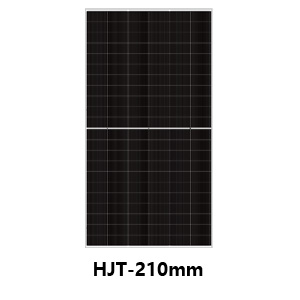
1. What are HJT 210mm Modules?
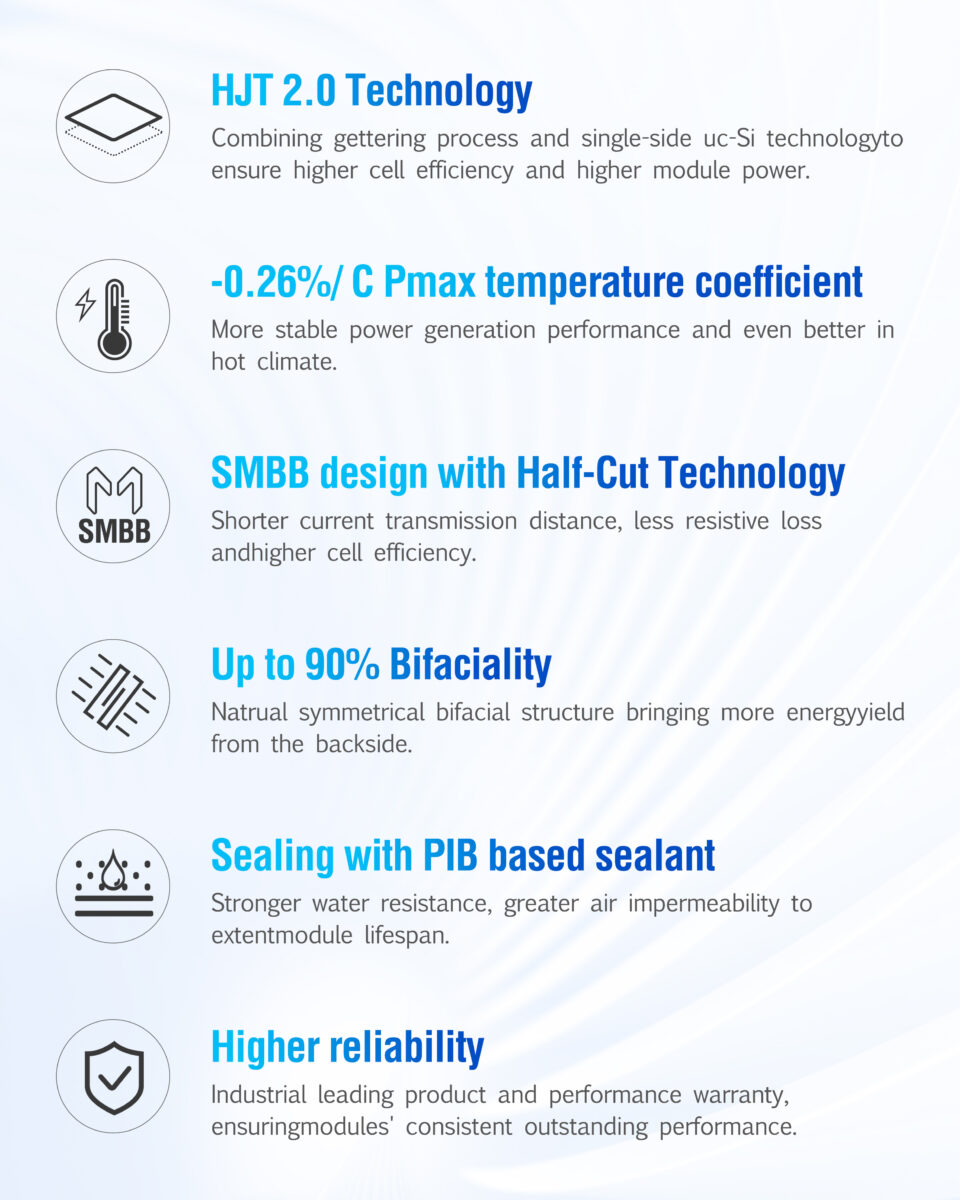
HJT stands for heterojunction technology, which is a top – notch technology in the photovoltaic cell field! Regular photovoltaic cells work like a solo performer, while HJT cells use N – type silicon wafers as the base and attach amorphous silicon thin films to both sides of the silicon wafer. It’s like giving the cell two super – capable assistants. By taking advantage of the characteristics of different materials, electrons and holes are arranged in an orderly manner, significantly improving the power generation efficiency!
The 210mm refers to the size of the silicon wafer. Think of the silicon wafer as a canvas. When you make the canvas bigger, you can “create” more electricity! Many photovoltaic companies nowadays, including industry giants like Tongwei and Longi, are putting a lot of effort into researching and producing HJT modules with 210mm large – sized silicon wafers, all aiming to gain an edge in this market!
2. The Outstanding Advantages of HJT 210mm Modules
- High power generation efficiency: The power generation efficiency of ordinary photovoltaic modules is around 20%, but HJT 210mm modules are different. Their conversion efficiency can easily exceed 23%, and the data in the laboratory is even higher! For example, if you install HJT 210mm modules on a 1000 – square – meter roof, compared with traditional modules, you can generate tens of thousands more kilowatt – hours of electricity in a year. That’s real profit!
- Long lifespan and reliable performance: Thanks to the use of N – type silicon wafers, HJT modules basically get rid of problems like light – induced degradation and potential – induced degradation. After 30 years, the power generation capacity of ordinary modules may only be 70% of the original, but the annual degradation rate of HJT modules is less than 0.35%. After 30 years, they can still maintain more than 80% of their power generation capacity, ensuring stable long – term returns!
- Performs well in high – temperature and low – light conditions: In hot summer, ordinary modules tend to “slack off” and their power generation efficiency drops significantly. HJT modules are different. Their temperature coefficient is extremely low. For every 1°C increase in temperature, the power loss is only 0.25%. They can also generate electricity stably during early morning, evening, or other low – light periods, truly operating around the clock!
- Dual – side power generation, double the benefits: HJT modules can generate electricity on both sides and utilize the reflected light from the ground, water surface, etc. In a fishery – photovoltaic complementary project, for example, the reflected light from the water surface can increase the power generation of the modules by 15%. It’s like getting two rewards for one investment!
3. Diverse Application Scenarios
- Large – scale ground – mounted photovoltaic power plants: In deserts and gobi areas in the northwest, when building super – large photovoltaic power plants, HJT 210mm modules can significantly reduce the cost per kilowatt – hour of electricity with their high – power and high – efficiency advantages. In GW – level photovoltaic bases in Qinghai, Xinjiang, and other places, after using these modules, the annual power generation has increased dramatically, contributing a lot to China’s clean energy construction!
- Distributed photovoltaic projects
- Household photovoltaic: Whether in rural or urban areas, installing lightweight and beautiful HJT modules on the rooftops of homes takes up little space and has high power generation efficiency. Even a small roof can generate a lot of electricity! Besides meeting the household electricity needs, the excess electricity can be sold to the grid, bringing in a nice “sunshine income”!
- Commercial and industrial photovoltaic: For the large rooftops of factories and shopping malls, installing HJT 210mm modules can make the most of the roof space with their high bifacial ratio and high power. A car manufacturing factory once installed these modules and the annual power generation met 30% of the factory’s electricity demand, saving a large amount of electricity bills!
- Building – Integrated Photovoltaics (BIPV): Integrating photovoltaic modules with buildings to create photovoltaic curtain walls and roofs. HJT modules are thin and aesthetically pleasing. They can generate electricity without spoiling the appearance of the building. Many office buildings and schools are adopting this technology, truly turning buildings into power stations and making each building a green energy producer!
- Special application scenarios
- Offshore photovoltaic: The marine environment is harsh, but HJT modules have excellent salt – fog corrosion resistance. Their low temperature coefficient gives them a significant advantage in the high – temperature marine environment, providing reliable technical support for large – scale offshore photovoltaic power generation!
- Agricultural – photovoltaic and fishery – photovoltaic complementary projects: Installing HJT modules above farmland or fish ponds is no problem. Their high light transmittance does not affect crop growth or fish survival, and they can generate electricity to increase income. For example, in a fishery – photovoltaic complementary project in Shandong, it not only increased fish production but also achieved clean energy production. It’s a win – win situation!
4. Development Prospects and Challenges
With continuous technological progress, the development prospects of HJT 210mm modules are extremely promising! China’s “14th Five – Year Plan” strongly supports the photovoltaic industry, and local governments have also introduced subsidy policies, which are very conducive to its promotion! However, it still faces some challenges, such as relatively high costs and complex production processes. But don’t worry! More and more companies are increasing their R & D investment. It is estimated that the cost will be significantly reduced in the next few years, and it will surely become the mainstream product in the photovoltaic market!
If you are interested in photovoltaic power generation, want to know if you can install it on your roof, or how companies can save money with photovoltaics, feel free to leave a comment and let’s chat!